
Designing Complexity and Connection at Congo Falls
February 3, 2026
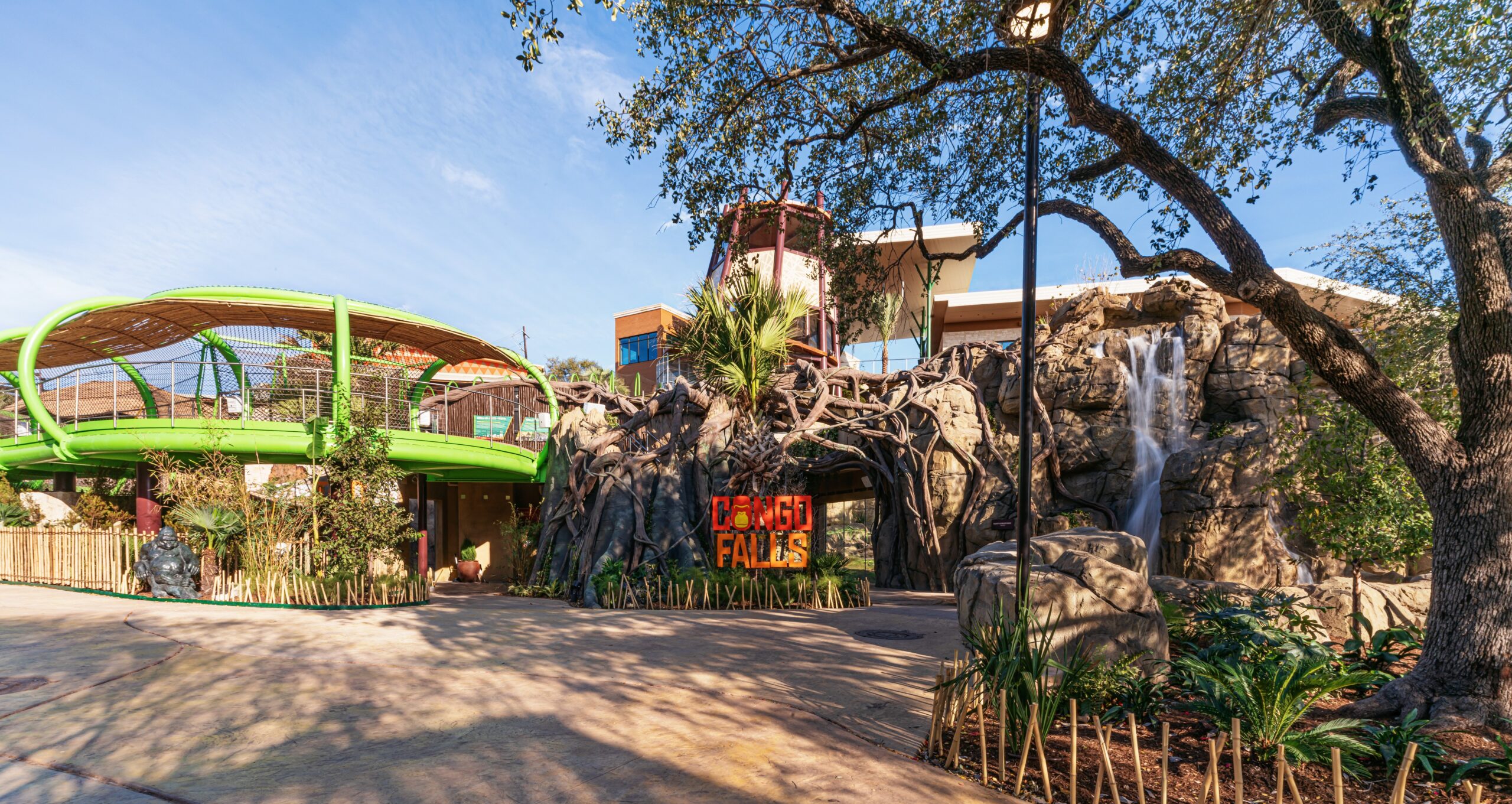
Plans for Congo Falls began almost a decade ago when the San Antonio Zoo embarked on a comprehensive campus planning process with PGAV. The plan provided the roadmap for future development at the Zoo, including the new Zoo Entrance and H.E.B. Entry Plaza, The Ralston events center, and Congo Falls.
Through the campus planning process, an underutilized, hard-to-reach area of the zoo with outdated habitats was identified as a priority for redevelopment. Knowing that bringing gorillas back to the Zoo was a must, the initial concepts for Congo Falls were born.
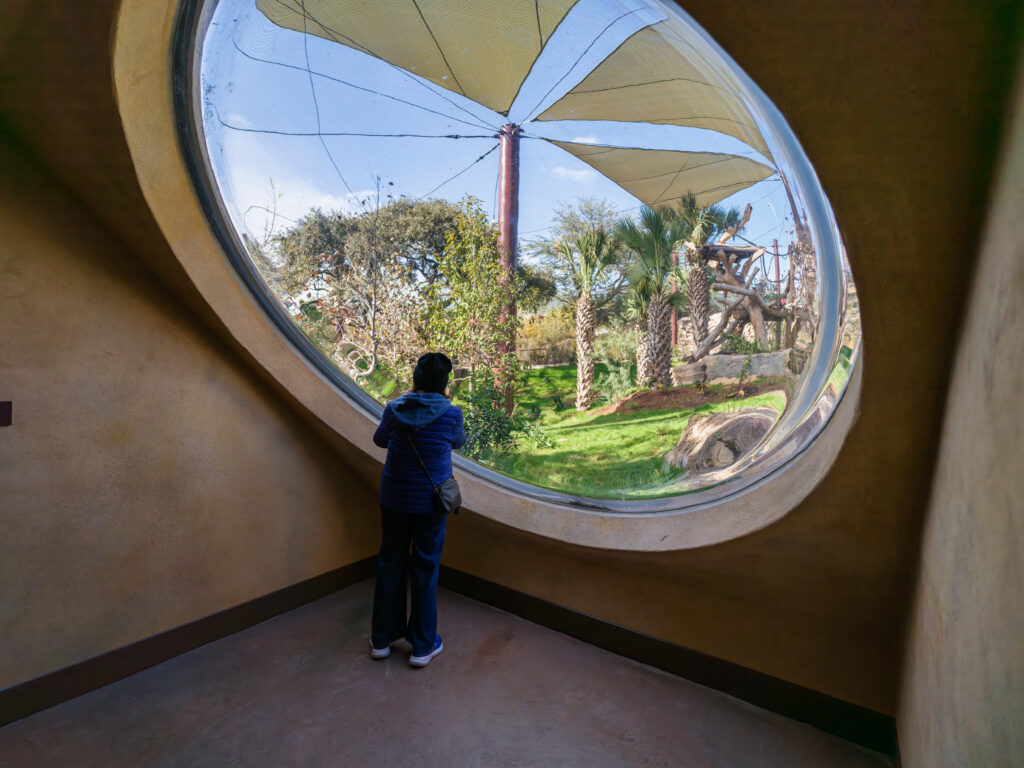
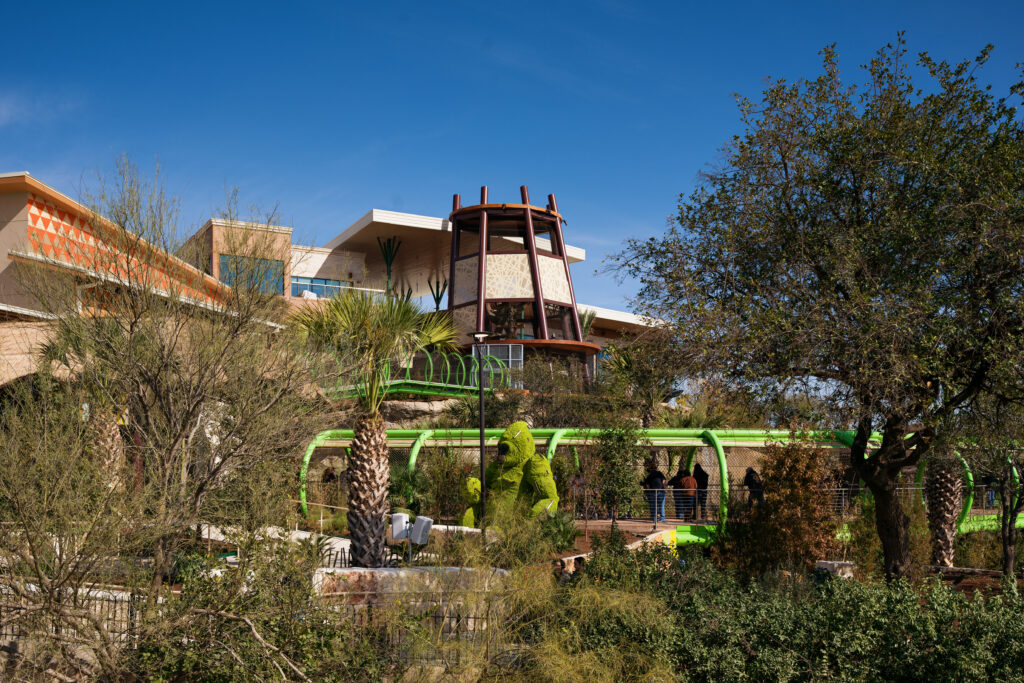
Congo Falls is a state-of-the-art gorilla habitat that unites animal wellbeing, guest adventure, and a one-of-a-kind gathering place at The Ralston. Set within an old quarry, the space is a layered journey. Visitors encounter the habitat from multiple perspectives, from below-grade views peeking through tree roots and vines to an elevated trail that mimics the trails used by the gorillas. As the path bends and twists, anticipation builds. At any moment, a 300-pound gorilla may be just around the corner.
From Sketch to Reality
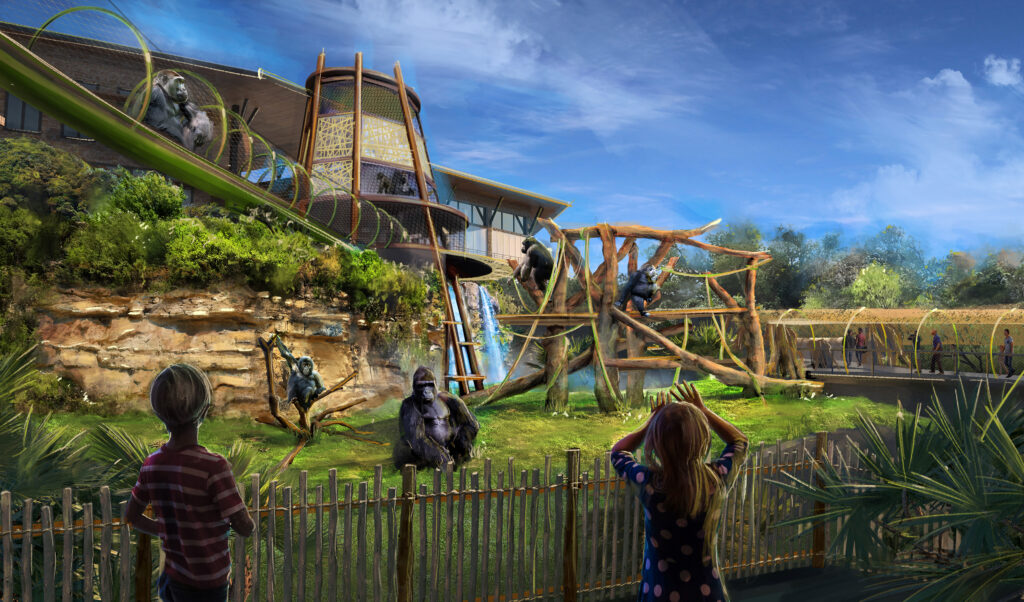 Sketch: PGAV rendering of Congo Falls
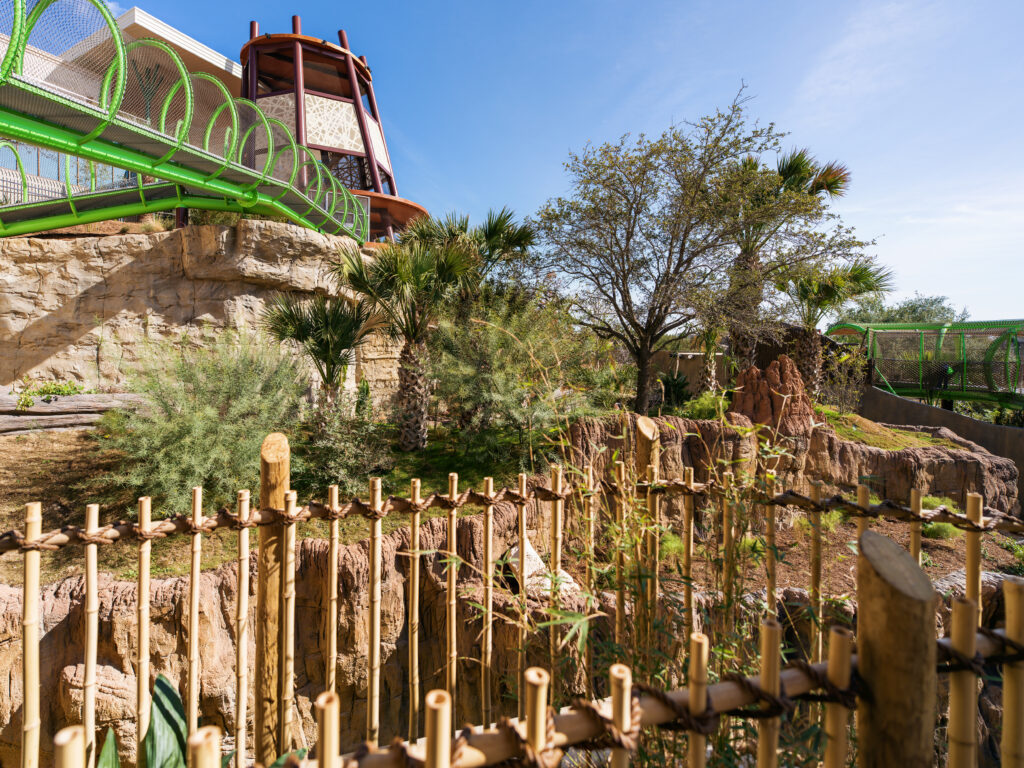 Reality: The finished Congo Falls habitat at San Antonio Zoo
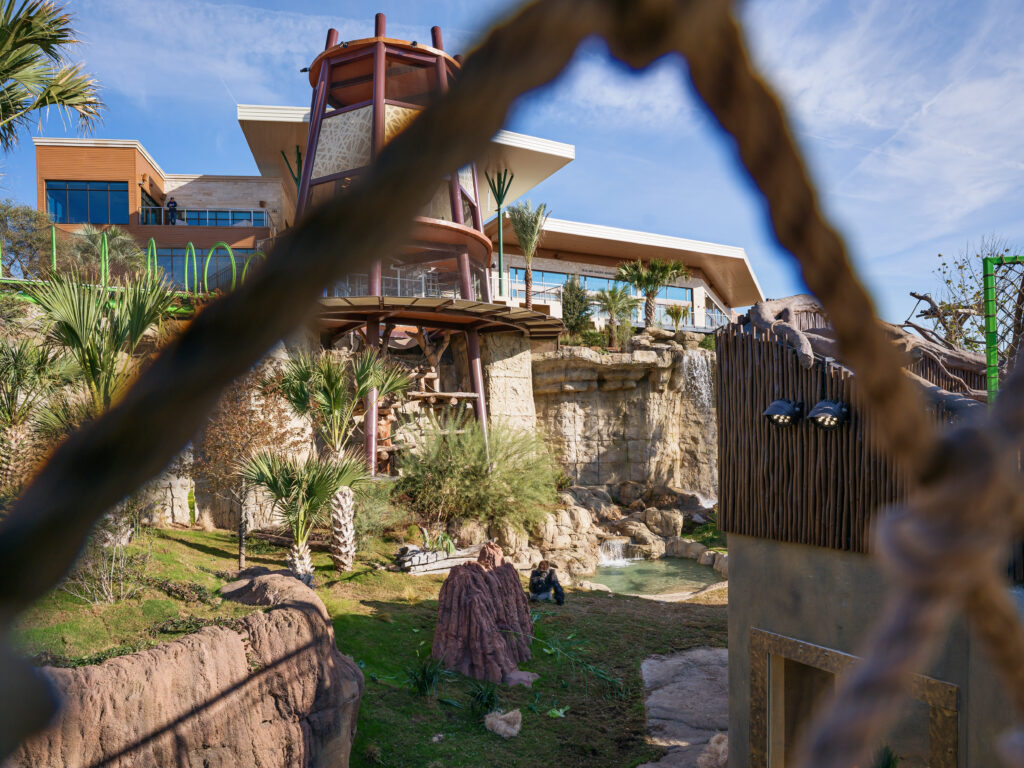 Reality: The finished Congo Falls habitat at San Antonio Zoo
“Early on in the design, we created a fly-through and a high-level conceptual design, and the project stayed remarkably true to that original vision. The guest trails, the tower, the gorilla pathways, and the connections between guests and animals were all there from the beginning,” Tom Marschner, PGAV Principal, says.
The zoo had big ideas—creating habitats and facilities that provide the flexibility to house multiple groups of gorillas at the same time. Jonathan Stechshulte, PGAV Landscape and Project Designer, says that planning for the multitude of gorillas required extra care. “Designing for a bachelor group versus a family group was critical. Spatial complexity helps reduce aggression and supports very different social dynamics.”
Stechschulte says, “Nature is dynamic, and wild habitats are dynamic too. We wanted the design to reflect that and allow these animals to thrive in their environment.” Congo Falls offers an expansive space and the ability to swap habitats, so the gorillas can constantly experience something new. There’s an east yard with a waterfall and play structures, and a fully enclosed west yard that supports both bachelor and breeding groups. The setup allows either yard to connect to the dayroom, or even for the gorillas to have access to everything at once. There are countless configurations—it gives both the keepers and the gorillas choice, flexibility, and opportunities for exploration. The gorillas can move vertically and horizontally, which supports enrichment, while guests experience them from every level.
“We started with the idea of giving the gorillas choice and control over environmental conditions, over where they spend time, and over when they’re visible. There are places where they feel they can get out of guest view, and they have the option to climb,” Stechschulte explains.
“At the same time, guests can almost always see them from some angle. It’s about balance—offering variety and security so the gorillas feel comfortable and can exhibit natural behaviors,” Marschner adds.
Towering Above
Congo Falls also includes the towering 70-foot Mays Family Silverback Peak. But why a tower? Stechschulte explains, “Historically, it was thought gorillas weren’t climbers as much as other apes. While that is generally the case, gorillas climb high into trees for fruit. The tower allows a stable climbing service so even a 400-500-pound silverback can climb. The vertical movement and climbing opportunities throughout the habitats also help combat obesity and heart disease, which are major risk factors for gorillas in zoos. Like humans, gorillas need to move and exercise to stay healthy, and giving them plenty of opportunities to climb, explore, and move around helps them do so.”
Enriching
As the design evolved, more complexity within the habitat was layered in—adding climbing structures, shade, and features that ensure the space stays enriching over time. Developed in close collaboration with the San Antonio Zoo’s animal care team, the habitat incorporates extensive built-in enrichment that supports natural behaviors. PGAV worked with a member of the Gorilla Species Survival Plan to thoughtfully design these elements, ensuring the environment supports both physical and behavioral wellbeing.
A deep and thorough understanding of species-specific behavior is the best starting point for designing a habitat that puts animal wellbeing at the forefront. Ethograms catalog the behaviors an animal would exhibit in a natural setting and provide a great starting point for a conversation between the client and designer. Stechschulte says, “These conversations need to happen at the beginning of the design process so we can all buy into the shared understanding of a natural range of behavior and how we can best enable the animals to achieve that. It becomes much easier to say these features are non-negotiable and worth the investment for the wellbeing of the individuals in our care. The shared understanding unlocks the potential of what behaviors you’ll see exhibited.”
Stechschulte says, “Many of these features can be low-cost improvements but may require a mind shift from older ways of doing things. If you let grass grow long, you might not see the animal as much, but you’re contributing to the animal’s psychological health.” Visitors to Congo Falls may notice the modular enrichment system featuring compartments placed throughout the habitat—some low, some high, and even built into the hillside. Each compartment is designed to fit a 5-gallon bucket, a cost-effective unit that can be used in countless ways: with holes for food or plantings, or to freeze food inside. Animal care staff can place them anywhere in the system, creating a dynamic, unpredictable environment. This encourages gorillas to explore, just as they would in the wild, where they spend about 14 hours feeding and foraging.
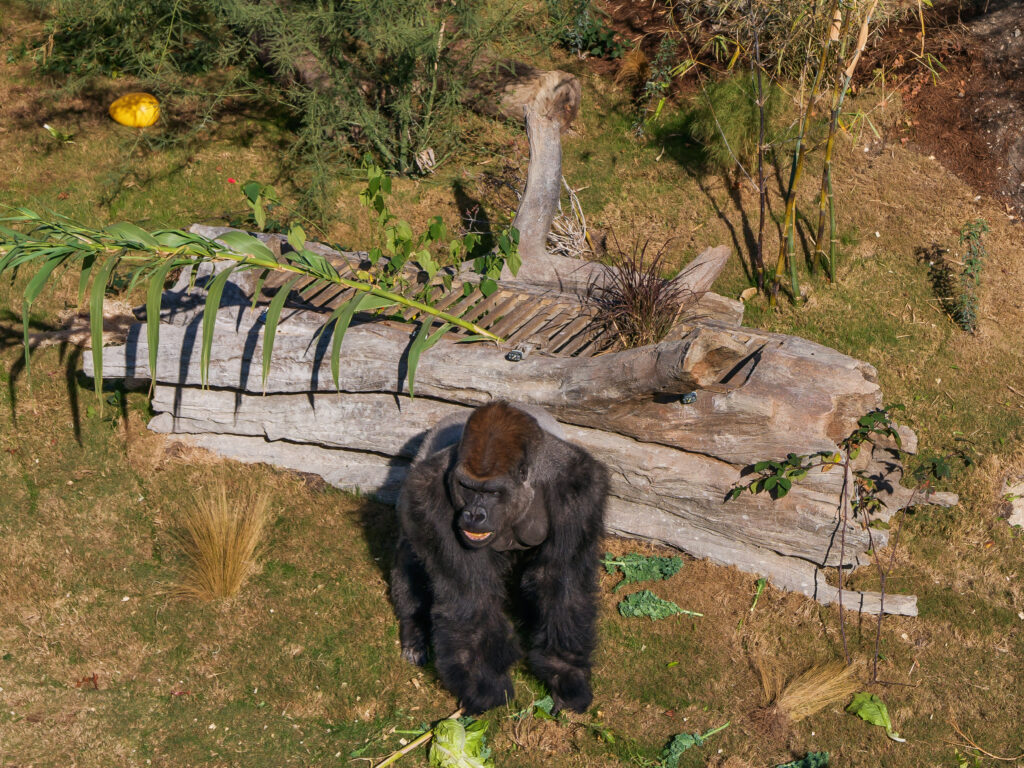
Stechschulte adds, “In my mind, designing habitats that are enriching for animals also translates into an even better guest experience. Visitors come to the zoo to see real animals. When animals are allowed and encouraged to exhibit a natural range of behaviors, it becomes a much more engaging/enriching experience for both animals and guests. We have these incredible and intelligent sentient, emotional creatures in our care. We should feel obligated to give them the very best range of experiences and care that we can.”
Guest Experience
This complexity and choice also provide an incredible guest experience, says Marschner. “The views are carefully curated, and the habitat is expansive. You have to move through it—it’s not passive. You’re not just walking past a window. There’s always a sense of discovery and a reveal. We really pushed to make sure no two views or experiences are the same, never knowing exactly where the gorillas will be. And when traveling to the area below grade, you suddenly pop up in the middle of the habitat where the gorilla could be looking down at you.”
Extending the Experience
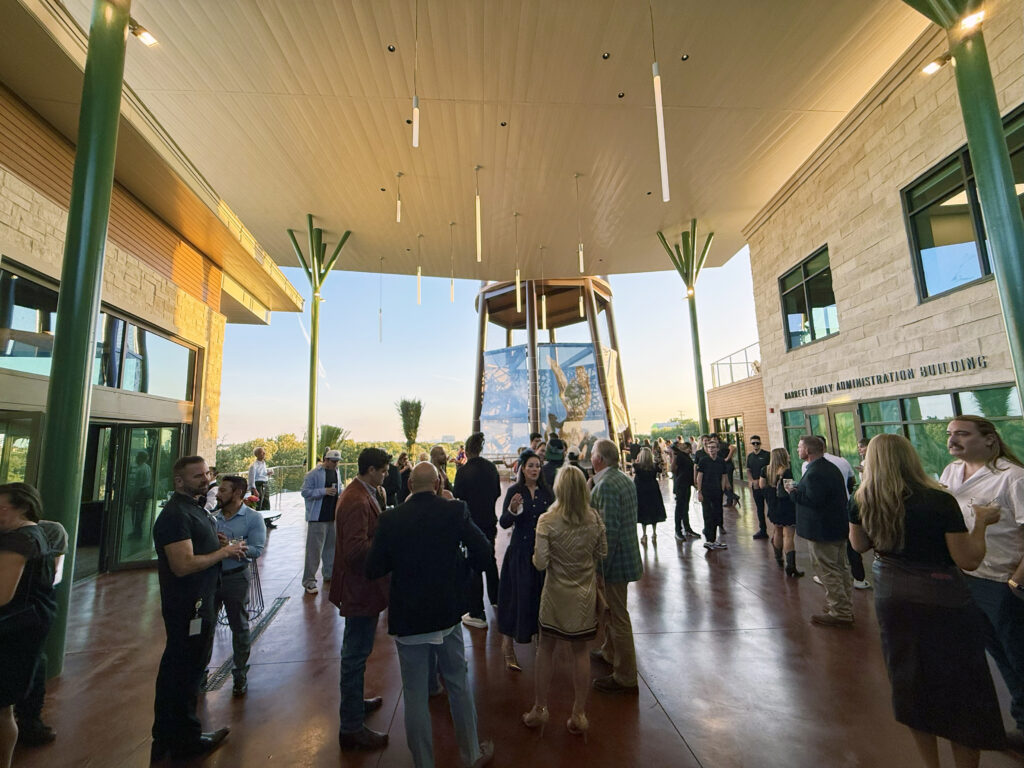
Rising above Congo Falls, The Ralston serves as a signature destination not only within the Zoo, but across the entire San Antonio region. Perched atop a former quarry wall, the venue captures sweeping, one-of-a-kind views of the Zoo and downtown San Antonio. The Mays Family Silverback Peak tower links The Ralston directly to the gorilla habitat below. A flexible event space anchors the experience, accommodating up to 500 guests and opening to an outdoor patio through operable glass walls.
“Where else can you host an event and have this kind of proximity to gorillas? It’s what makes The Ralston the most unique event center in San Antonio. Guests don’t just engage with the animals—they start learning about gorilla conservation in a meaningful way,” Marschner says.
Below the event space, a centrally located kitchen supports both events and food-and-beverage operations across the campus.
Animal Wellbeing + Guest Experience
Together, Congo Falls, The Ralston, and the Mays Family Silverback Peak form a cohesive destination that elevates animal care, deepens guest connection, and expands the Zoo’s role as a place for conservation, celebration, and community.
Marschner says,“Guests are brought directly into the gorillas’ world. That face-to-face connection is what inspires care and conservation. Then interpretation—graphics, docents, staff—layers in the education. You draw people in with awe and fun, and then you ‘sneak’ the learning in.”
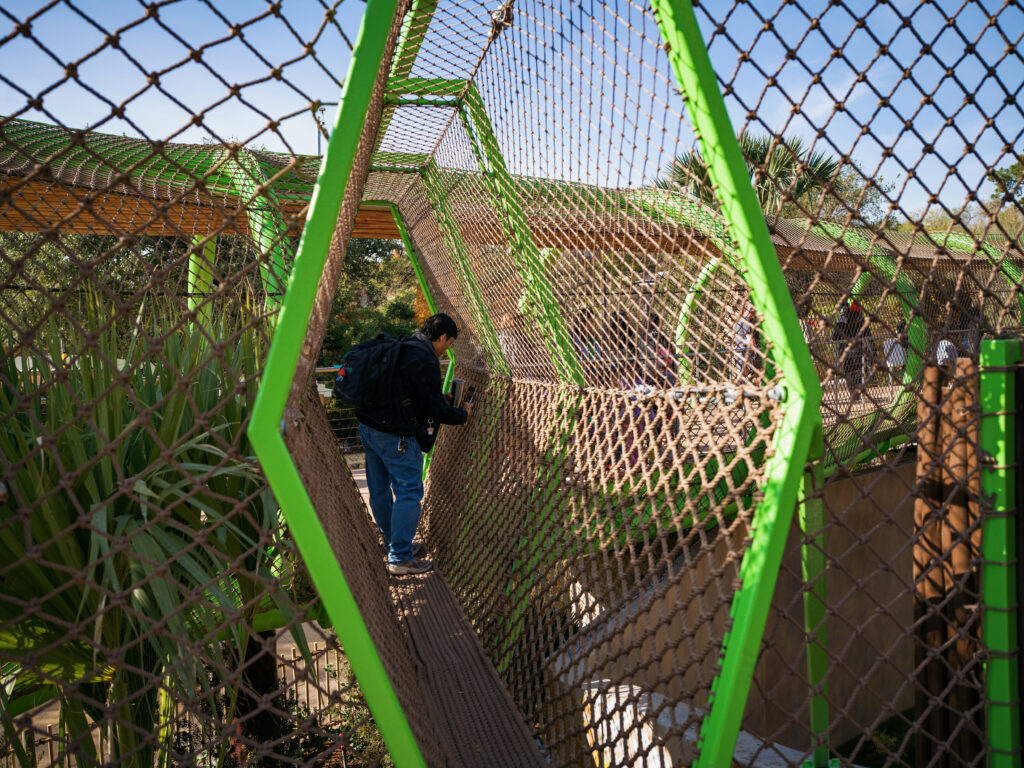
“For me personally, the underlying design ethos of Congo Falls was to create equally dynamic, appropriate, and amazing environments for gorillas and guests. From that point, every design decision—from the careful placement of each plant and integrated enrichment opportunity, to the multitude of vertical complexities and unique spaces, to the interconnectivity of the habitats and curated sightlines—was informed through this lens of providing an abundance of unexpected moments for gorilla and guest alike,” Stechschulte notes.
Date
February 3, 2026
Categories
Tags