
PGAV’s Voice of the Visitor: Destination First. Attraction Driven.
April 28, 2026
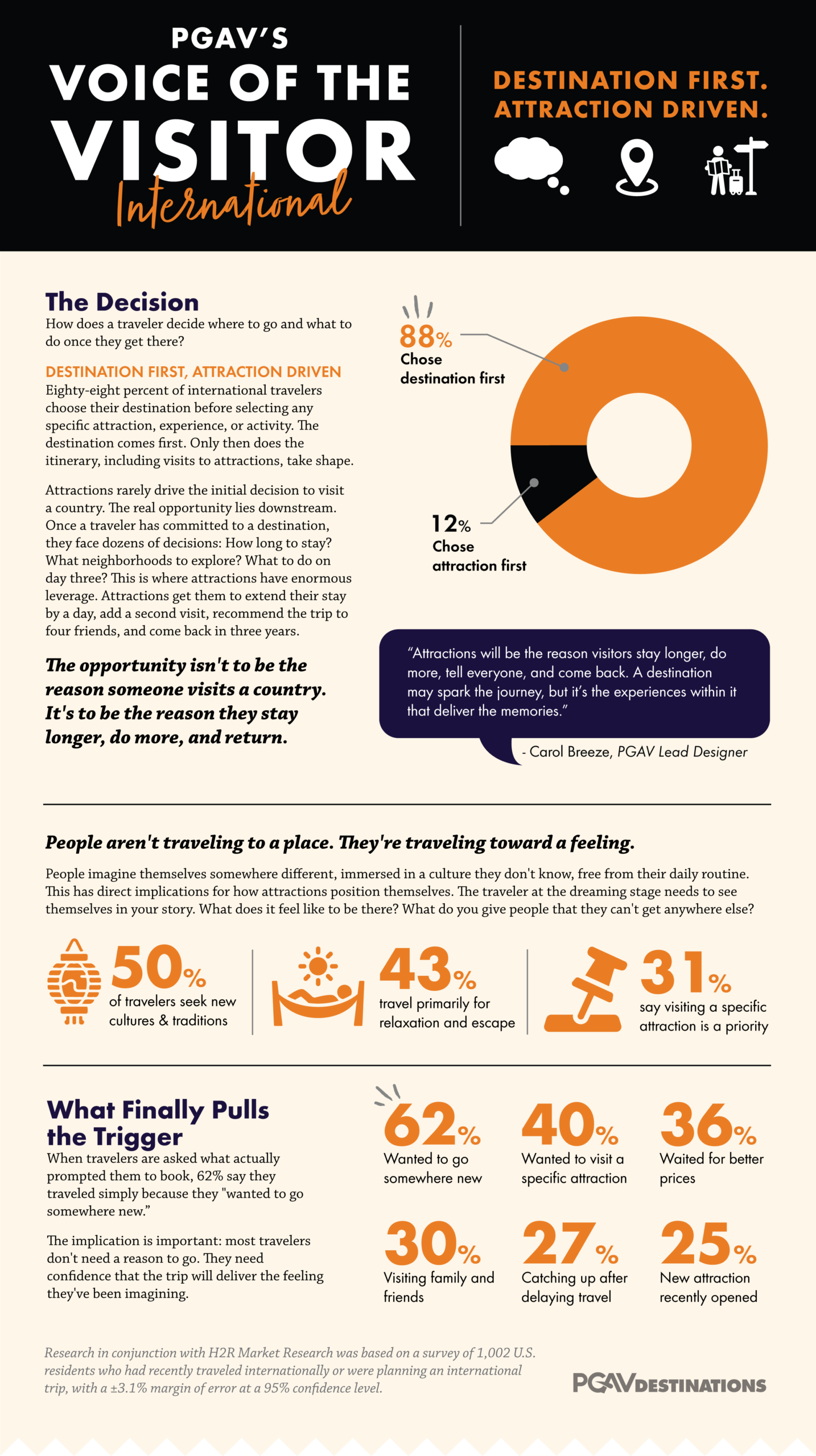

Eighty-eight percent of international travelers choose their destination before selecting any specific attraction, experience, or activity. The destination comes first. Only then does the itinerary, including visits to attractions, take shape.
The Itinerary as Identity
Once a destination is chosen, the question shifts from where to go to how it will be experienced. The itinerary is a blank canvas waiting for attractions to fill it, and those attractions can dramatically impact a visitor’s experience. Travelers often structure their itineraries around anchors that are the must-see sights of the trip and discoveries, the experiences that add depth. Together, they transform a trip into a memory.
But these choices are not just logistical. Today’s travelers are chasing meaning. According to the Mastercard Economics Institute, when deciding to travel, consumers often seek purpose, authenticity, and value. PGAV’s research reinforces this, with 50% of respondents seeking new cultures and traditions. When attractions deliver on these desires, they fulfill the feeling guests set out to find. As Carol Breeze, PGAV Lead Designer, explains, “An attraction can complete the feeling a guest came for and in doing so, become the story they tell when they return home.”
Anchor vs. Discovery
Anchor Attractions
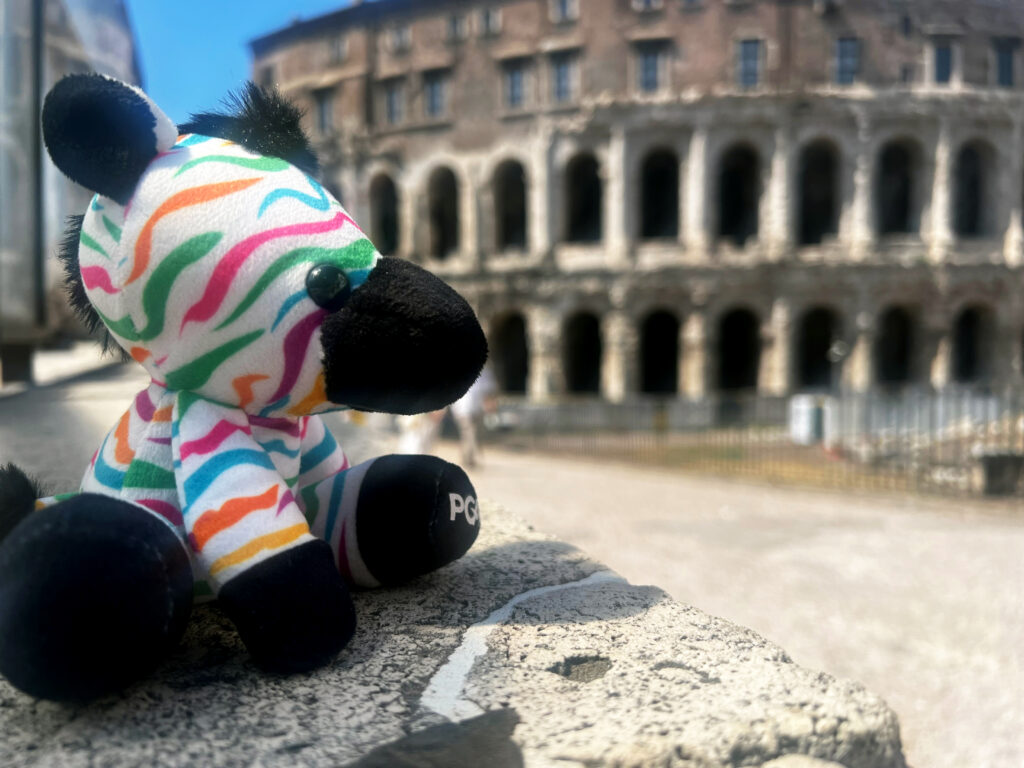
The Eiffel Tower. The Colosseum. The Grand Canyon. The traveler has known about them since childhood. When booking the trip, the anchor attraction is non-negotiable. Anchors rarely need to win attention. The strategic challenge is extension: Does the visitor purchase a VIP tour, special access, or bespoke experience? What do they bring home from the gift shop? What do they tell their friends? What do they do before and after? The anchor attraction’s job is to be worthy of the fantasy that drove the trip in the first place and to send people deeper into the destination.
Discovery Attractions
Discovery attractions don’t need to compete with the Eiffel Tower for destination selection. They need to compete for the afternoon. The neighborhood museum. The culinary experience found through a hotel concierge recommendation. The unexpected afternoon that becomes the most-told story of the trip. Discovery attractions earn their place through research, word of mouth, and mid-trip, when the traveler is open and ready to find something new.
Flexibility can be part of the appeal. A family might arrive at a destination together, then split into smaller groups. Two are heading off to learn to bake bread in a hands-on workshop, while the others wander to the art museum or themed experience. Discovery attractions win when they offer enough variety and agency for every visitor to shape their own afternoon and still come back together with something to share.
And perhaps the real competition comes from guests who say they are traveling for rest and relaxation. The extra hour at a café. An afternoon nap. The decision to wander without a plan. And for a person on vacation, that’s extraordinarily appealing. When a traveler chooses to visit your attraction, they could be choosing it over rest and downtime.
What This Looks Like in Practice
- Designing for dwell, not throughput. Every operational choice, including pacing, layout, food and beverage, and programming, is evaluated on whether it creates reasons to stay longer.
- Engineering referral moments. Identifying the specific points in the experience most likely to generate organic word-of-mouth and investing in making them more frequent and more shareable.
- Positioning within the discovery funnel. Optimizing presence across trip-decision channels: hotel concierge recommendations, community platforms, etc.
Anchor attractions validate the decision to go to a destination, while discovery attractions deepen the experience once the visitor is there. Both can deliver on the feeling the traveler set out to find.
The Bottom Line
When travelers are asked what actually prompted them to book, 62% say they traveled simply because they “wanted to go somewhere new.” That implication is important: most travelers don’t need a reason to go. They need confidence that the trip will deliver the feeling they’ve been imagining.
“Attractions will be the reason visitors stay longer, do more, tell everyone, and come back,” Breeze notes. “A destination may spark the journey, but it’s the experiences within it that deliver the memories.”
Date
April 28, 2026
Categories