
The Next Chapter of a Legacy
August 24, 2026
A Tradition of Storytelling
Long before the Cherokee language was written in the 1820s, stories carried history, culture, and identity from one generation to the next. Storytelling has always been central to Cherokee life, preserving traditions, values, and knowledge through the spoken word.
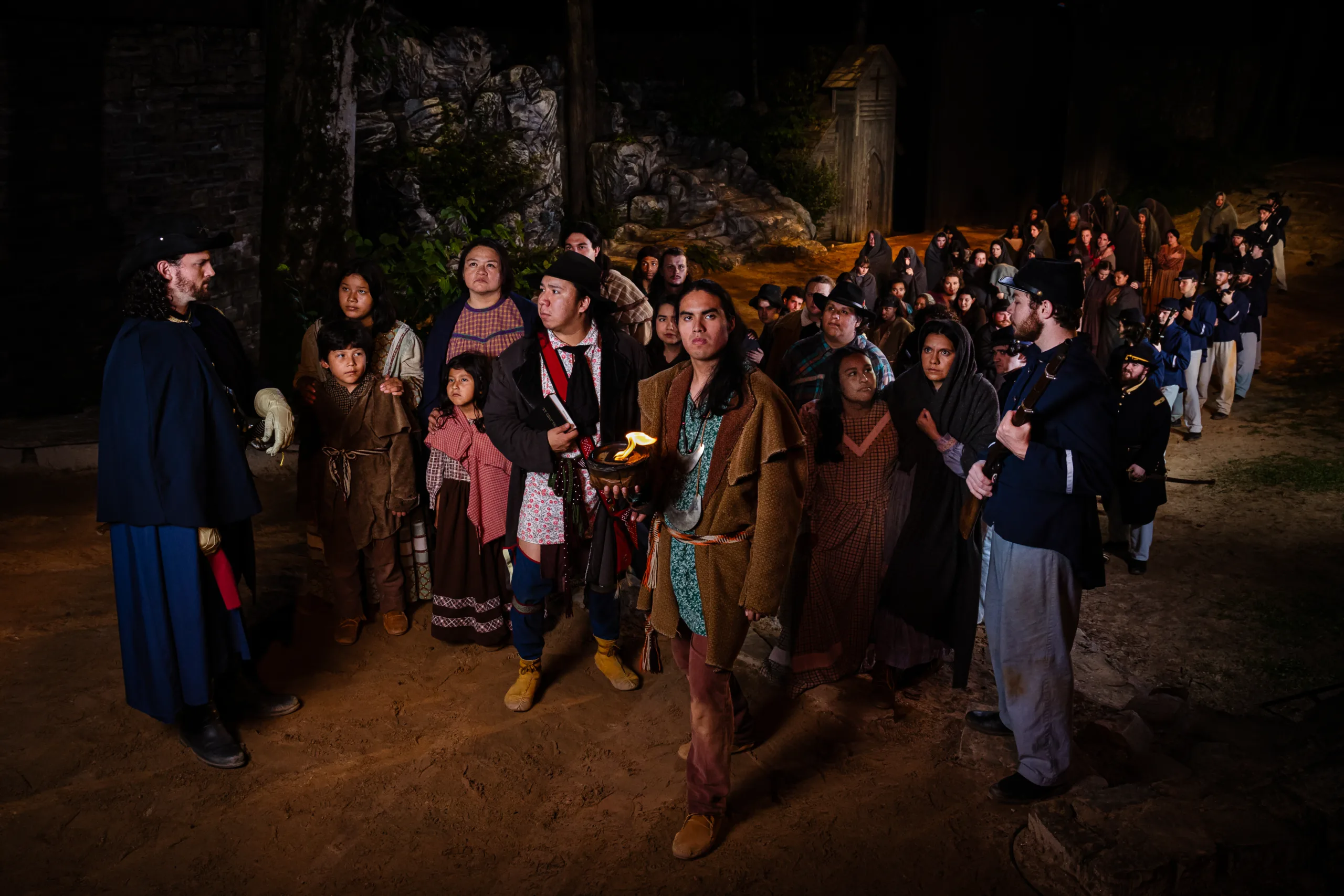
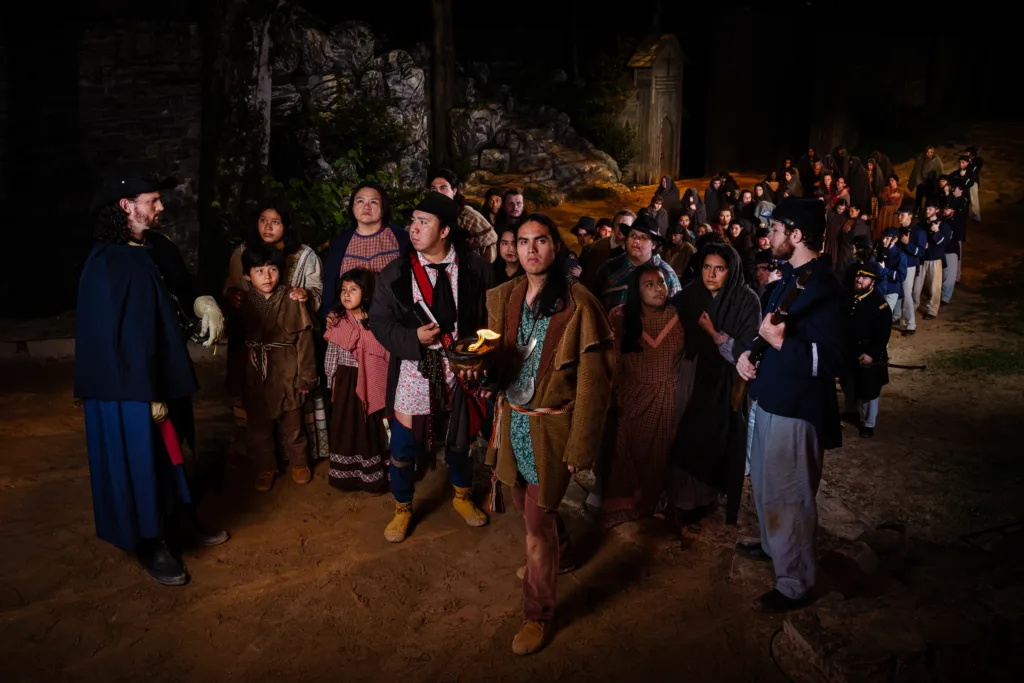
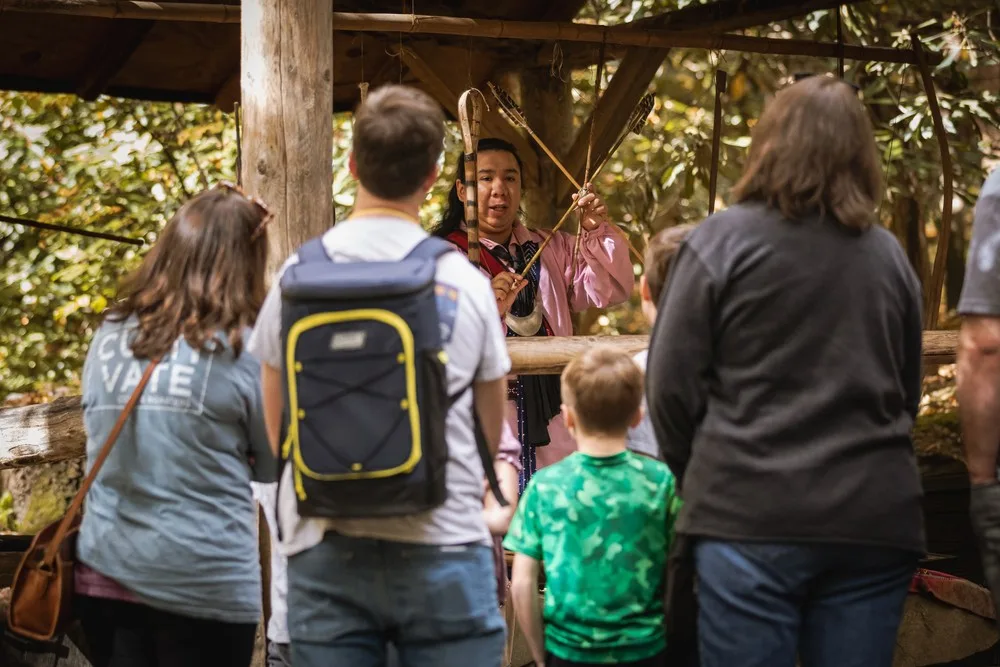
Today, that tradition continues through experiences like Unto These Hills, performed at Mountainside Theatre, and the Oconaluftee Indian Village, where living history brings Cherokee culture to life.
Together, these experiences tell a unique story. Throughout the Indian Removal Act and the Trail of Tears, the Eastern Band of Cherokee Indians remained connected to their ancestral homeland in the Great Smoky Mountains. Rather than living on federally designated reservation land, the Eastern Band owns the Qualla Boundary. It has remained a sovereign nation within the United States since 1868, a distinction that makes their history unlike any other.
Laura Blythe says, “The preservation of our culture isn’t just about stories written or spoken. It is about actively participating in the continuation of our culture by sharing stories, speaking our language, and creating art with our hands. Ours is a living, breathing culture. Practicing our customs, heritage, language, and arts is simply part of being Cherokee. It is our responsibility to carry these traditions forward, so they are preserved and continue to thrive for generations to come.”
As CHA looks toward its next chapter, it has partnered with PGAV to develop a comprehensive master plan that honors Cherokee traditions while creating new ways to engage audiences for generations to come.
Preparing for the Next 75 Years
While CHA’s mission remains unchanged, the expectations of visitors have evolved dramatically.
Families discover destinations differently than they did in the 1950s, when roadside travel fueled American tourism. Today’s visitors arrive with different expectations, seeking immersive experiences, interactive learning, and reasons to return throughout the year.
Blythe explains, “The brand and market research completed through our PGAV Master Plan provided eye-opening insights. Our primary audience is aging, our venues have seen few significant updates in decades, and our facilities limit the types of experiences we can offer. Today’s audiences expect immersive, engaging environments, and without investment, we risk losing opportunities to reach new generations of visitors. We are pursuing improvements that appeal to modern audiences while staying true to our mission. There has to be a balance that honors authenticity while presenting our stories in ways that inspire people to listen, learn, and connect. Without thoughtful investment, sustaining our operations will become increasingly difficult.”
Rather than focusing on a single attraction, PGAV worked with the CHA to envision the future of the entire campus. Hector Caiazza, PGAV Project Lead, says, “We approached the master planning effort with a mindset of listening, understanding, and respect. From there, it’s about creating opportunities for guests to experience Cherokee culture firsthand. These opportunities take shape as spaces where guests are intentionally brought into the story, gaining an understanding of history and how it continues to shape Cherokee culture. The result is an experience that sparks conversation and fosters a deeper connection to the Cherokee culture. Ultimately, it’s an approach that reflects a living culture that continues to evolve rather than capturing a single moment in time.”
Creating a Living Campus
The resulting master plan combines physical and operational strategies, creating an interconnected destination while strengthening CHA’s long-term sustainability through expanded earned revenue, fundraising opportunities, and strategic marketing.
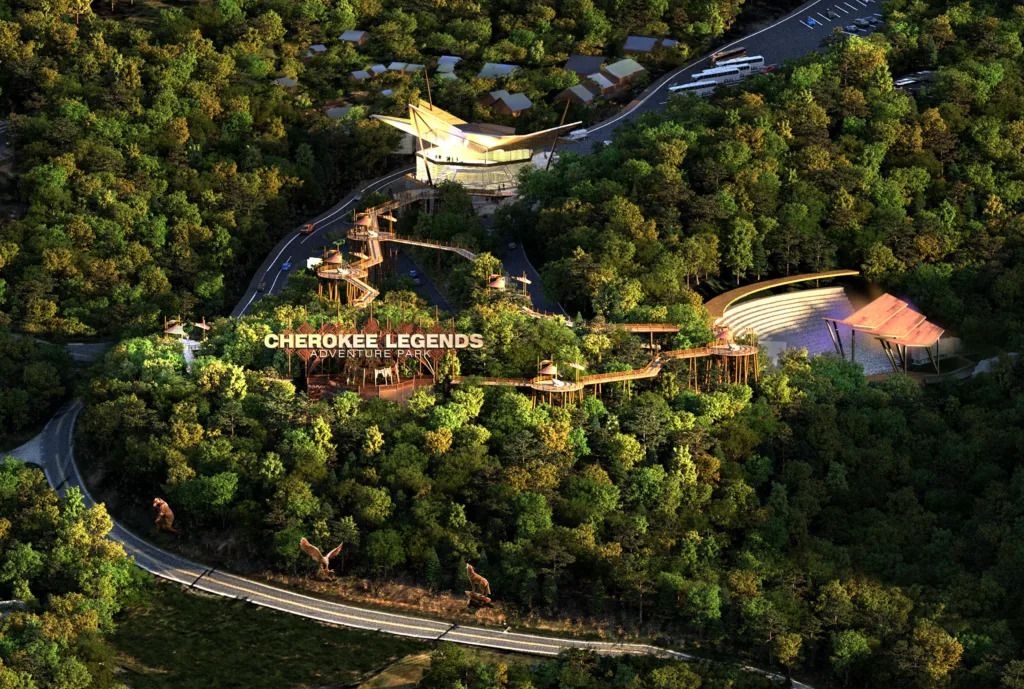
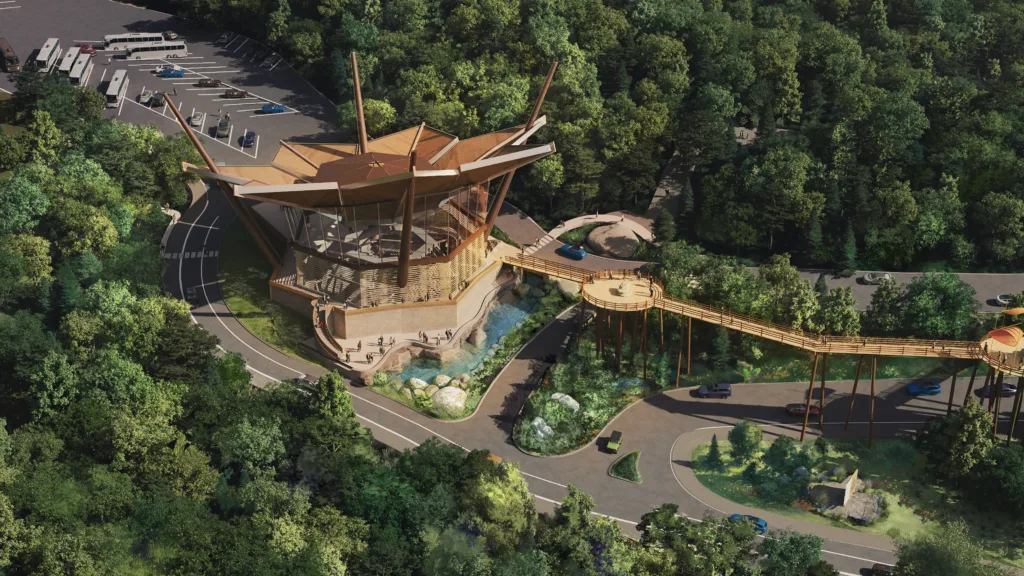
A new Experience Center serves as the heart of the campus and is designed to operate year-round. Blythe notes the value of a year-round experience, “For more than 70 years, we have operated as a seasonal organization. This addition will allow us to offer meaningful cultural programming throughout the year. That means more opportunities for full-time employment, greater stability for our staff, and new ways for Cherokee artists, performers, craftspeople, and cultural specialists to share their work. When visitors have more to experience, they stay longer, benefiting not only CHA but also local hotels, restaurants, shops, and other businesses throughout Cherokee. Ultimately, this isn’t just an investment in buildings or attractions. It’s an investment in our people, our culture, and ensuring Cherokee people continue telling our own story while creating opportunities for the next generation.”
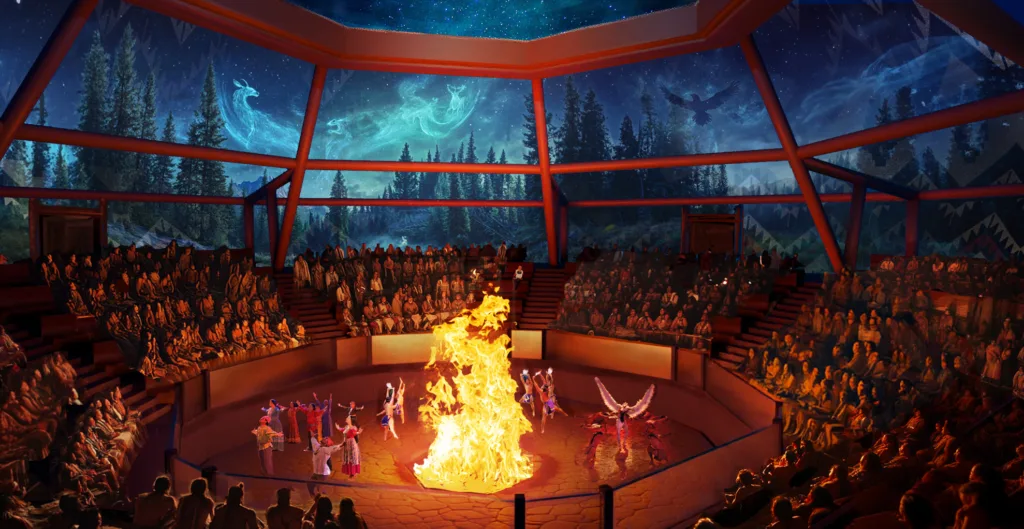
Caiazza notes, “The Experience Center is intended to bookend the guest experience. It will include multiple ways to experience Cherokee stories, both guided and self-directed. The facility features a museum that shares Cherokee history, spaces for living cultural experiences, and an immersive theater-in-the-round. Together, these spaces support digital media, live performances, exhibits, educational programming, and community events, creating opportunities to connect with visitors and Cherokee community members.”
A theater-in-the-round offers flexible programming capable of hosting everything from a reimagined Drama featuring a 25–50-member cast to Cherokee speakers sharing legends, language, seasonal and cultural celebrations, and stories of the night sky.
The plan also reimagines Mountainside Theatre as a world-class outdoor amphitheater capable of hosting multiple productions, performances, and community events throughout an extended season. The renovations preserve the site’s natural beauty and acoustics while introducing enhancements that support modern productions. New elements blend into the landscape, respecting the original setting while improving the theater’s long-term functionality.
Outside, a proposed Canopy Trail creates a dramatic arrival experience that draws visitors uphill while introducing Cherokee stories before they even reach the main campus. Improvements to Oconaluftee Indian Village would further strengthen one of the nation’s premier living history experiences.
Blythe says, “We want to create experiences and programs that tell our story with integrity and authenticity while moving beyond the narrow narratives people find in history books. We are still here. The challenge is sharing our history and culture in ways that connect with today’s world. Digital content is one of the fastest ways to reach younger generations, but an immersive campus with multimedia experiences creates opportunities to connect with people of all ages. Our goal is to offer meaningful ways to experience Cherokee culture so we can continue sharing our story.”
When Design Becomes Storytelling
Throughout the master plan, architecture itself becomes another storyteller.
The proposed Experience Center draws inspiration from the traditional seven-sided Cherokee council house, representing all of the tribal clans coming together for community celebration and business.
Natural wood materials reference traditional Cherokee construction, while architectural details echo patterns found in basket weaving, weapons, and other traditional crafts. A water feature reflects the historic relationship between Cherokee villages and nearby rivers.
Every design decision reinforces that Cherokee culture extends beyond exhibits and performances, becoming part of the experience throughout the campus. Blythe notes, “Design elements are largely based on how Cherokee people interpret the world. Our respect for the natural elements surrounding us is reflected in the water features, the ‘talking leaves’ design that incorporates our Cherokee language, and traditional patterns found in our arts.”
A Roadmap for the Future
A master plan provides a shared vision for growth while remaining true to an organization’s mission. For CHA, it creates new ways for stories that have endured for centuries to continue inspiring future generations.
Blythe notes, “The most surprising part of the process was realizing how difficult it is to decide which changes are truly necessary. Balancing the legacy of our programming with new avenues for storytelling can feel intimidating. At the same time, it has been incredibly gratifying to see what is possible. Planning large-scale projects for a small nonprofit can be overwhelming, but we learned we have a team that is optimistic, committed, and ready to embrace change.
“Success for CHA means becoming a sustainable, year-round organization that continues to tell authentic and vibrant Cherokee stories. It means mentoring our youth in Cherokee language, cultural arts, and traditional teachings while embracing innovative multimedia created by local artists and storytellers. It’s about balancing preservation and innovation so future generations can carry our traditions forward authentically.
Cherokee is a vibrant culture that is being lived, practiced, and passed from one generation to the next. It is especially meaningful because we have remained in our ancestral homelands, sharing our stories for thousands of years. Investing in how we tell those stories is essential, not only for the future of CHA, but for the stewardship of our history and culture. Stories carry greater meaning when they are shared by the people who live them and honor the ancestors who came before us.”