
What the Forest Teaches
September 14, 2026
What the Forest Teaches
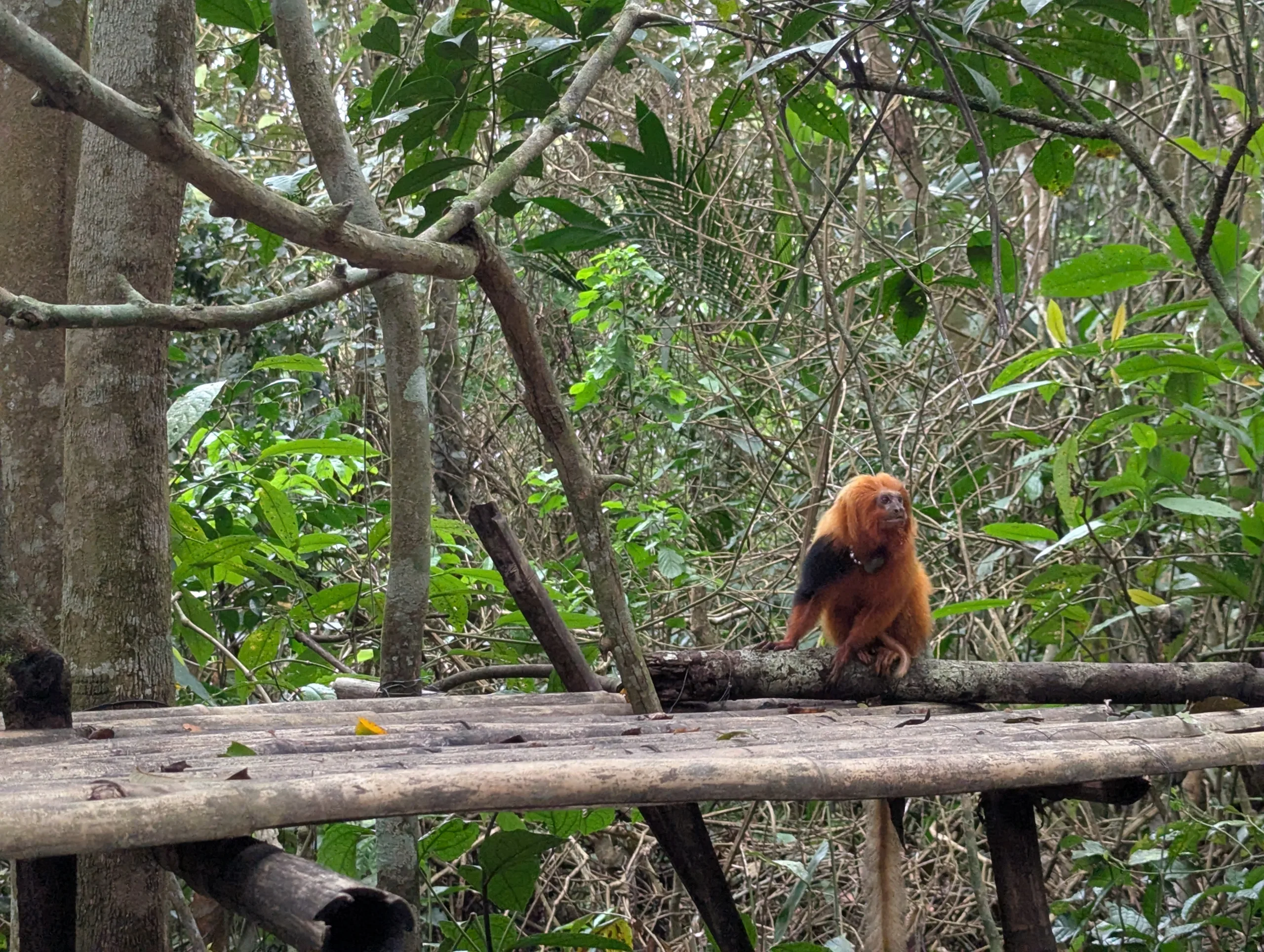
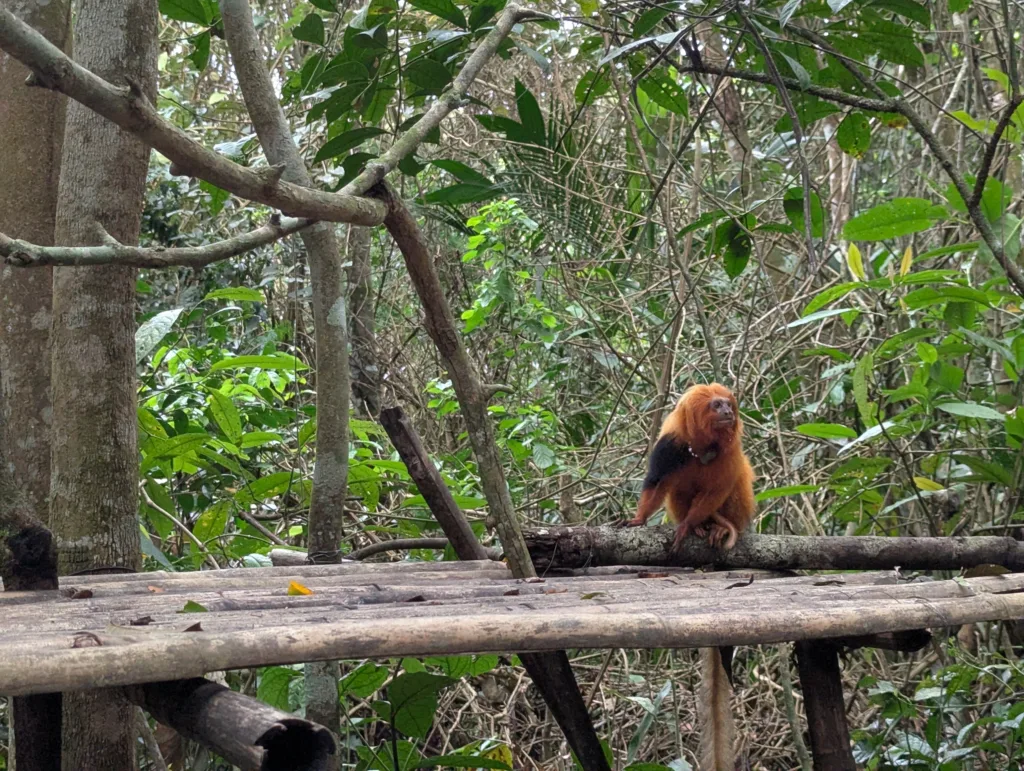
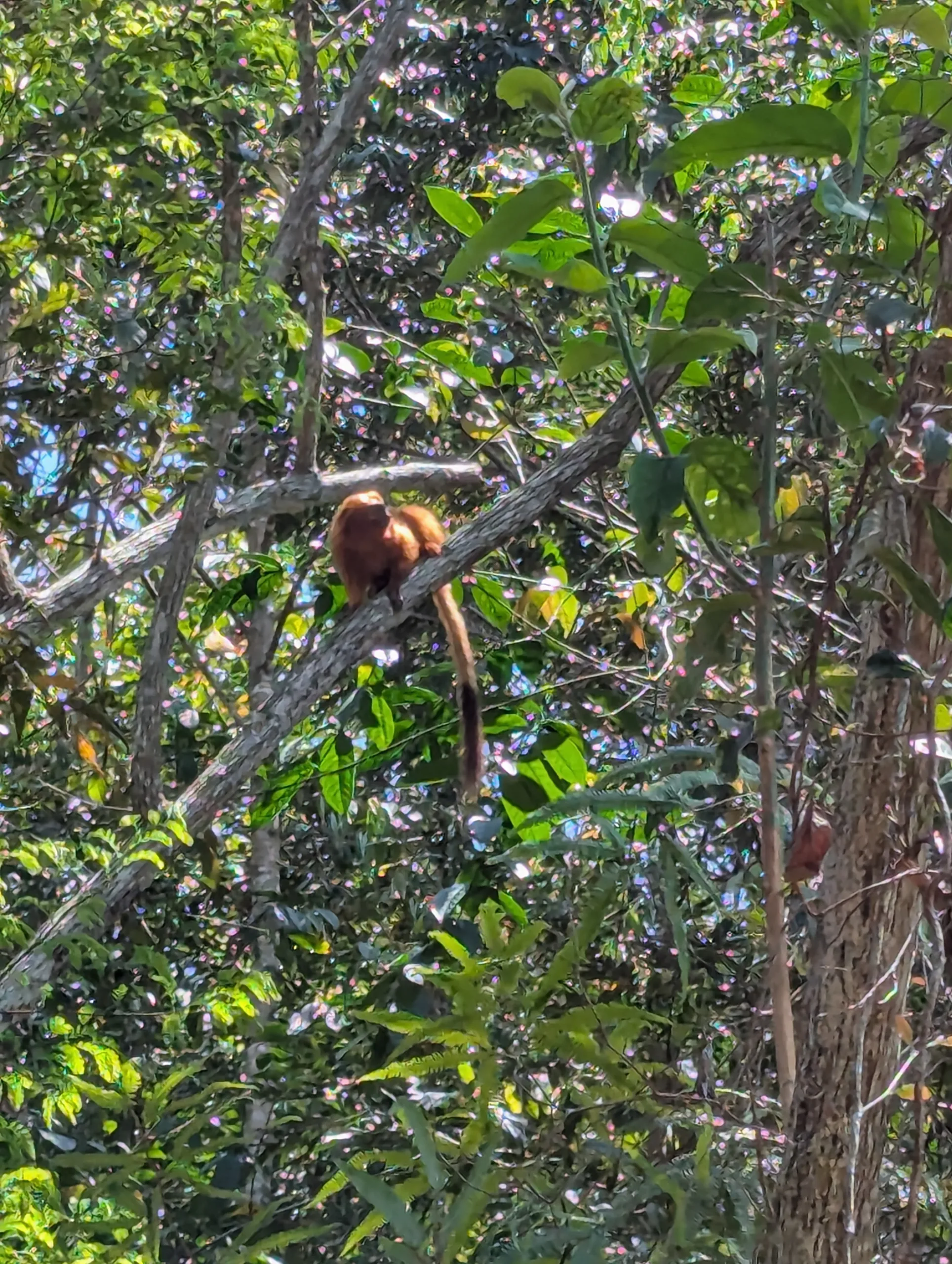
A small group trekked through the forest, listening carefully for a sound that could easily be mistaken for a bird. There was no guarantee the group would see them. Golden lion tamarins are small, quick, and skittish. Finding them among the canopy requires patience.
But the group spotted one.
Then, they watched as a troop of golden lion tamarins leaped one by one from tree to tree, moving through the canopy. The animals called to one another, answered by neighboring troops, and continued through the forest.
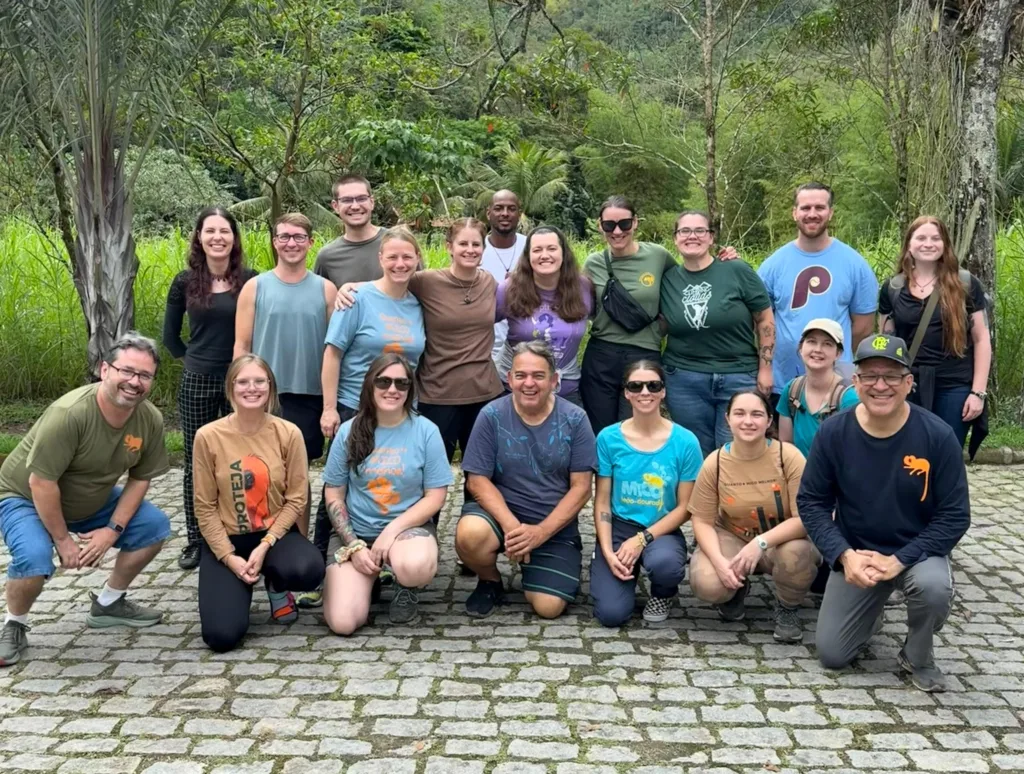
For Rosey Masek, PGAV Destinations’ Director of Animal Wellbeing & Habitat Design, her trip to Brazil with the Association of Zoos and Aquariums, International GLT Studbook, Save the Golden Lion Tamarin, and Associação Mico-Leão-Dourado was an opportunity to see this animal and the environment it depends on in a way that research alone could never replicate.
“I came to understand golden lion tamarins in a completely different way,” she says. “There was something magical about learning to recognize their call. Starting with absolutely no clue what I was listening for, then being able to recognize it immediately amid the cacophony of forest sounds was amazing. And to learn from the people who have dedicated their lives to giving them a future was even more incredible.”
That firsthand experience is at the heart of Masek’s approach to design. She believes creating successful animal habitats starts with understanding the animals themselves: how they move, what they need from their environment, how they interact with other species, and how a space can encourage natural behaviors.
Into the Forest
Golden lion tamarins are small, but their world is not.
Masek participated in field monitoring and conservation activities, moving through the Atlantic forest in Brazil and observing how golden lion tamarins navigated their environment. She saw them use different levels of the canopy, from the middle layers to the treetops.
The forest observations illustrate how thoughtful habitat design can support natural behaviors by emphasizing varied pathways, elevations, and connections rather than acreage alone.
“We tend to focus on the amount of space,” she says. “But it could be space plus complexity. That means verticality, connectivity, and materiality matter.
“Enrichment can be choice and control for things like temperature, shelter, light.” Masek continues, “If you provide an animal multiple spaces but if those spaces are just replicas of each other, the animal wouldn’t be encouraged to explore. Instead, give them multiple spots with microclimates that vary by degrees, utilizing sun, shade, wind, etc. Maybe there are bridges to further locations, and they understand there are multiple spots for various foods, so they figure out which one is worth it for them.” The goal is to create opportunities for animals to explore their environment, make choices within it, and exhibit behaviors that reflect how they would act in their natural habitat.
The tamarins move through an ecosystem alongside sloths, marmosets, birds, and other species. “It made me think about how we could explore more mixed-species habitats,” Masek says. “And not just with mammals, but with birds, amphibians, reptiles, and insects. There’s so much more activity than just that animal. If we’re trying to bring a place in the world to guests, that complexity would help it feel more real.”
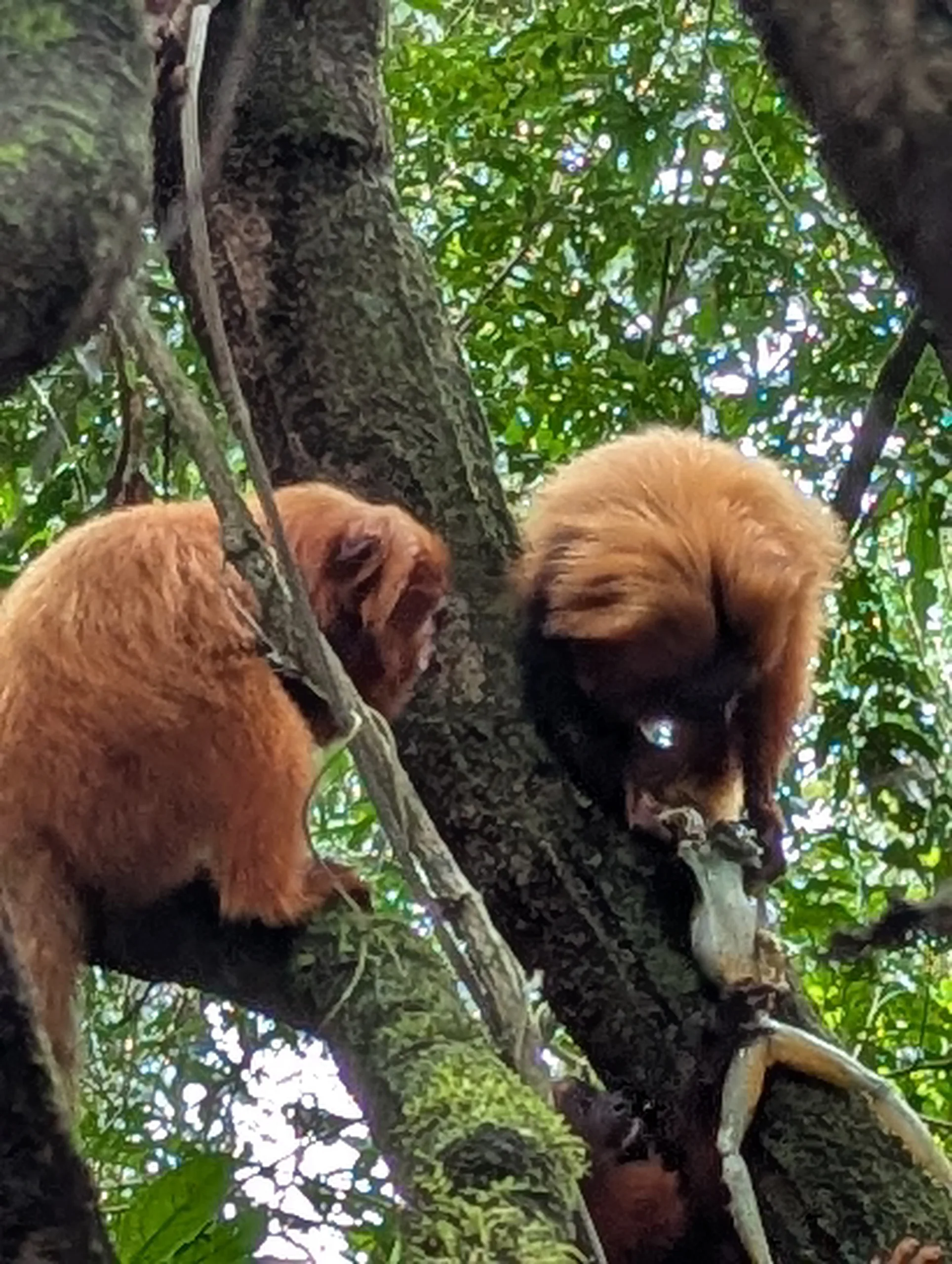
She also witnessed behaviors that are difficult to fully appreciate without being immersed in the environment. At one point, the group noticed a tamarin holding something high in a tree. It turned out to be a frog. Other members of the tamarin’s troop joined in, pulling at it. For Masek, it highlighted the idea that natural behaviors, including working together and foraging, would be incredibly engaging for guests. She says, “Nobody in our group looked away while watching the tamarins destroy the frog!”
A habitat needs to serve both animals and guests, but the two goals don’t have to compete. We need to understand what their ethograms might be and what their natural behaviors are so we can find ways to encourage these,” Masek says. “The more opportunities we give the animal to behave naturally can create a more engaging experience for people, too.”
For Masek, those choices are an important indicator of wellbeing. “When the animal uses the majority of their space, when they are in good health and don’t develop stereotypical behavior,” she explains. “When they seem curious and want to try new things placed in their space… When they play.”
Conservation Is Bigger Than the Habitat
The trip also expanded Masek’s understanding of what it takes to protect a species.
Saving golden lion tamarins isn’t simply a matter of protecting animals in a forest or creating appropriate habitats in zoos. The work involves connecting forests, supporting communities, working with farmers, educating neighbors, and creating corridors that allow animals to move safely through a fragmented landscape.
Masek saw those connections firsthand. Conservationists, zoos around the world, and local farmers all played a role in protecting and reintroducing the golden lion tamarin.
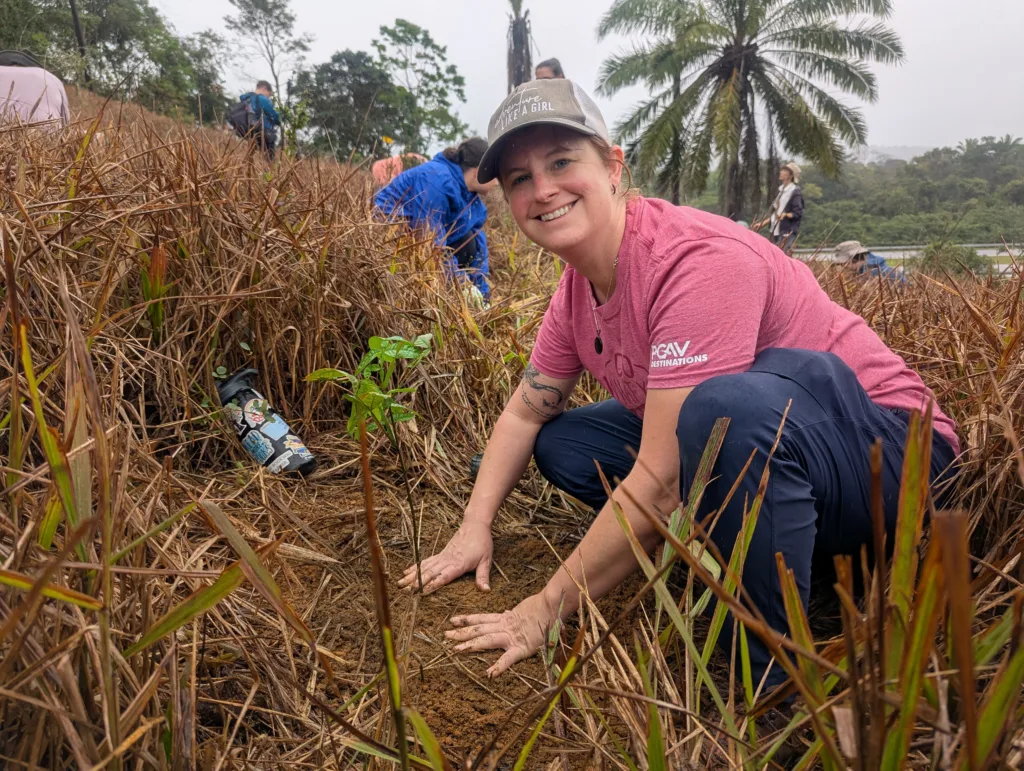
Deforestation and other environmental pressures pushed the population close to the brink. Zoos sent golden lion tamarins to the conservation effort, helping establish a population that could eventually be reintroduced to the wild. Conservationists worked with local farmers, an effort that took time and trust, to plant trees and create the forest corridors the tamarins needed to move between habitats.
That partnership became very tangible during Masek’s trip. Farmers used their land to plant trees for the canopy. In return, the conservation team supports farmers by clearing vegetation around their cocoa plants and planting and caring for seedlings. That collective effort has helped rebuild the golden lion tamarin population, increasing their genetic diversity and giving them a better chance to sustain themselves in the wild.
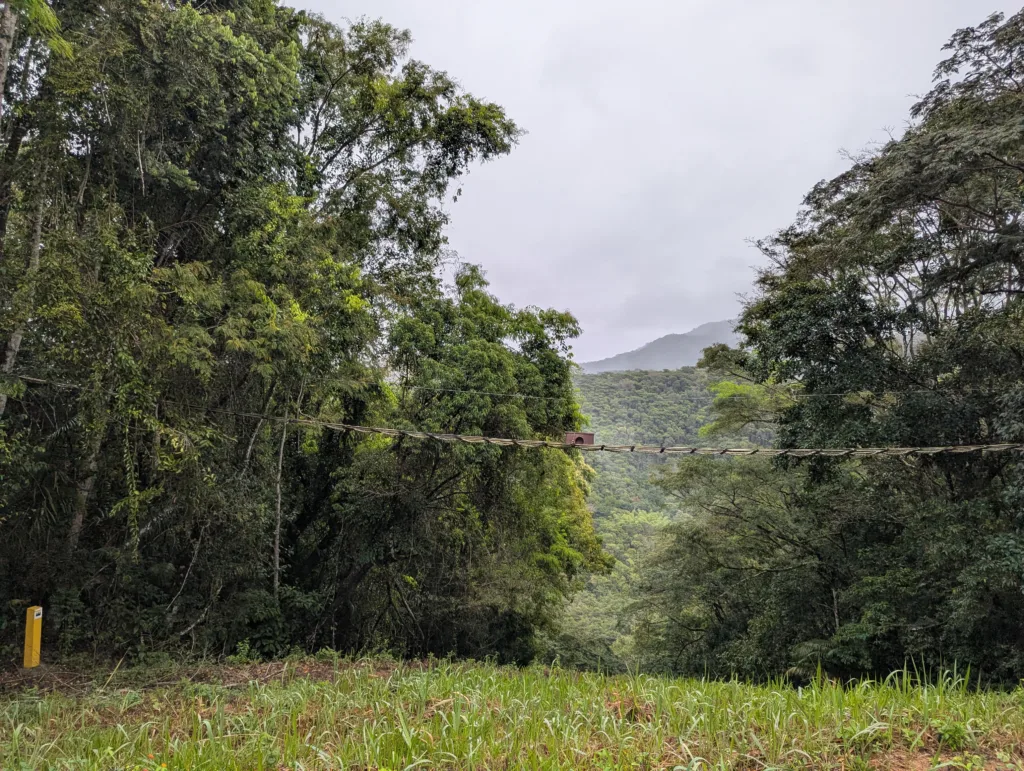
Masek also noted that conservation solutions don’t always have to be complicated. Sometimes the most effective intervention is one that understands how an animal actually moves through its world. One striking example was using simple bridges to connect the canopy across barriers. Where roads, pipelines, or other infrastructure prevented trees from forming a continuous route, ropes and elevated bridges gave animals a safer way to travel.
“There’s almost no habitat in the world without people around it,” Masek says. “You have to work with everything surrounding it.”
That is a valuable lesson for designers. Masek says, “The strongest conservation-focused experiences don’t isolate animals from the human story. They help people understand the relationships between wildlife, forests, agriculture and communities.”
After planting a hillside of trees one day and then going to a local farm to plant seedlings, the group was invited to a large farm to share a meal. Conservationists, farmers, and visitors who had spent the day working together sat down at the same table.
Bringing the Forest Back to the Studio
For PGAV, the value of experiences like Masek’s extends well beyond one species or one project.
Firsthand field experiences give designers a deeper well of understanding to draw from. They help turn abstract information into something tangible: the sound of an animal’s call, the height of the canopy, the way an animal chooses one route over another.
Most importantly, they build empathy.
“There might be behaviors you witness in the wild that they might not typically do while watching them in the zoo,” Masek explains. “When you go to their natural habitat, you’re immersed in it. It builds empathy.”
That empathy changes the questions designers ask.
Instead of simply asking, How much space does this species need? The questions become more nuanced:
What behaviors do we want to encourage?
Where can this animal make choices?
How can the animal move through the environment?
What happens when the animal wants to retreat, explore, or seek something different?
How can the habitat support natural behaviors?
And perhaps most importantly: What can we learn by observing the animal rather than designing from assumptions?
Designing to Inspire
Masek brought home another lesson from the forest: conservation stories deserve to be shared.
She was struck by how many people were contributing to the effort to protect golden lion tamarins. She was equally struck by how much of the work zoos do behind the scenes may be invisible to the public.
Zoos and aquariums, she believes, have an opportunity to tell those stories more often.
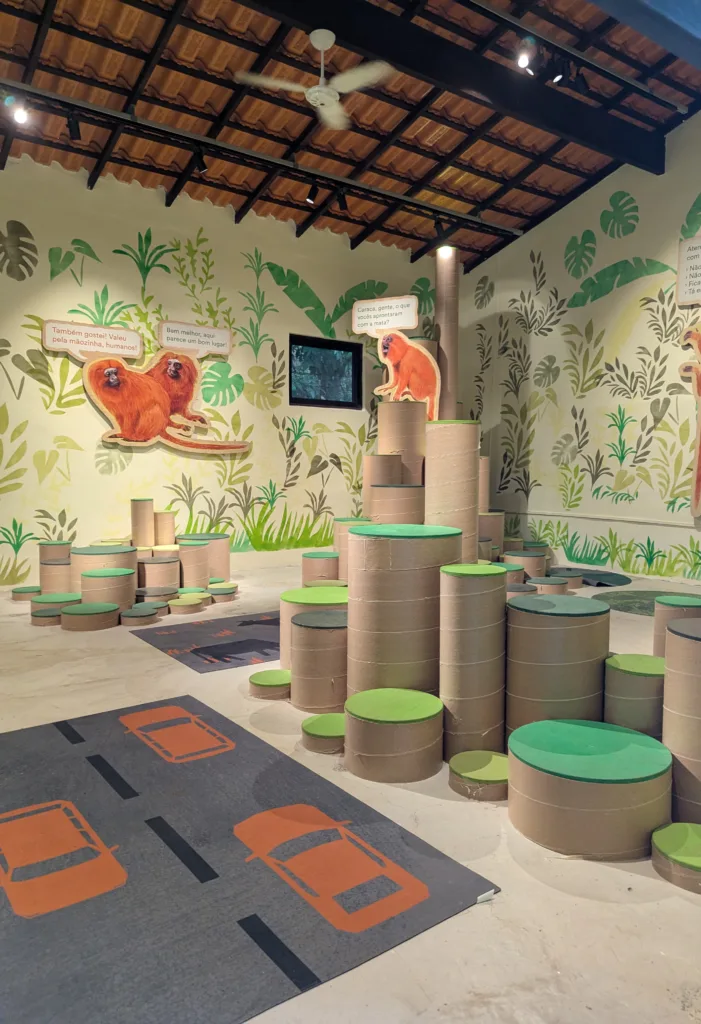
A small educational hut she encountered during the trip offered an example. It helped visitors understand the golden lion tamarin and the work being done to protect it without requiring them to enter the forest themselves.
This is where habitat design and storytelling intersect. Masek explains, “If guests can see animals behaving naturally, understand why the environment is designed the way it is, and learn how people are working to protect the species beyond the walls of the zoo or aquarium, the experience goes beyond just watching the animal. It can inspire action.”
That is ultimately why firsthand experiences matter. Better understanding leads to better questions. Better questions lead to more empathetic design. And more empathetic design can create environments that are better for animals, more engaging for guests, and more meaningful to the conservation stories they tell.
The forest offered Masek a chance to see golden lion tamarins as living animals navigating a complex world. Because sometimes becoming a better designer starts with stepping away from the drawing board and into the forest.
Date
September 14, 2026
Categories
Tags